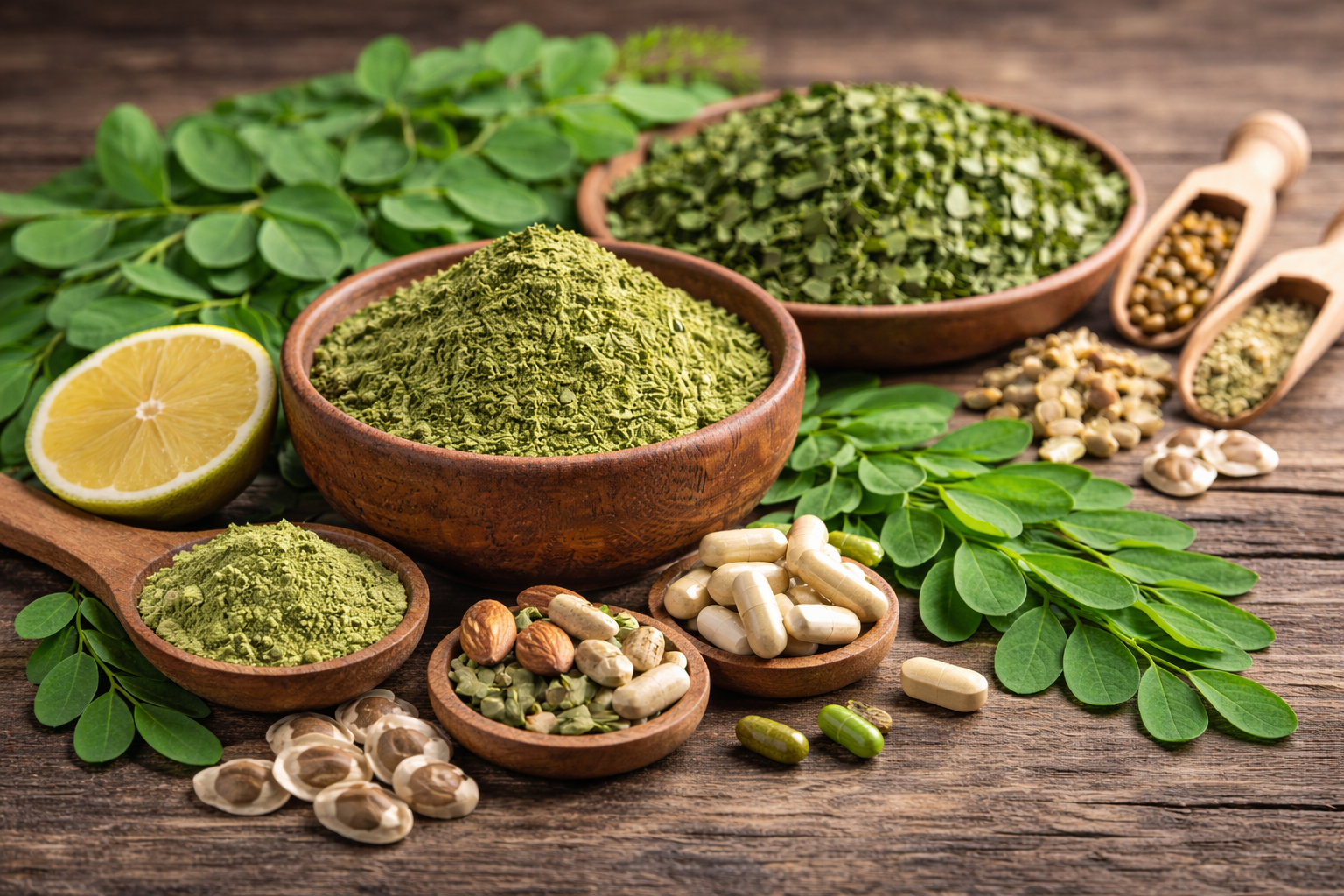
Moringa Knowledge – Origin, Benefits & Cultivation Explained Simply
Everything you need to know about the Moringa plant, its cultivation and its importance.
Moringa Knowledge – What Is Moringa?
Moringa is a fast-growing plant native to tropical regions and has been used for centuries in various parts of the world.
Moringa is a fast-growing plant native to tropical regions and has been used for centuries in various parts of the world. The Moringa tree is especially known for its leaves, which are traditionally used as food in many cultures.
Originally, Moringa comes from northern India, but today it is cultivated in many tropical and subtropical regions – including Africa, Southeast Asia and Latin America. The plant is considered robust and adapts well to different climatic conditions.
In recent years, interest in Moringa has increased as the plant and its components have been increasingly studied by scientific research. A factual perspective helps to clearly distinguish between traditional use, modern research, and exaggerated marketing claims.
Moringa Knowledge – Overview of Key Topic

Nutrients & Ingredients
Die Blätter enthalten eine Vielzahl natürlicher Inhaltsstoffe. Dazu zählen Vitamine, Mineralstoffe und pflanzliche Proteine, die in unterschiedlichen Studien untersucht werden.

Cultivation & Climate
Moringa grows best in tropical and subtropical regions. Climate, soil conditions, and water availability play a central role in the plant’s growth.

Sustainability
Due to its robust characteristics, low water requirements, and short growth cycles, Moringa is well suited for sustainable cultivation in suitable regions.
Uses of Moringa
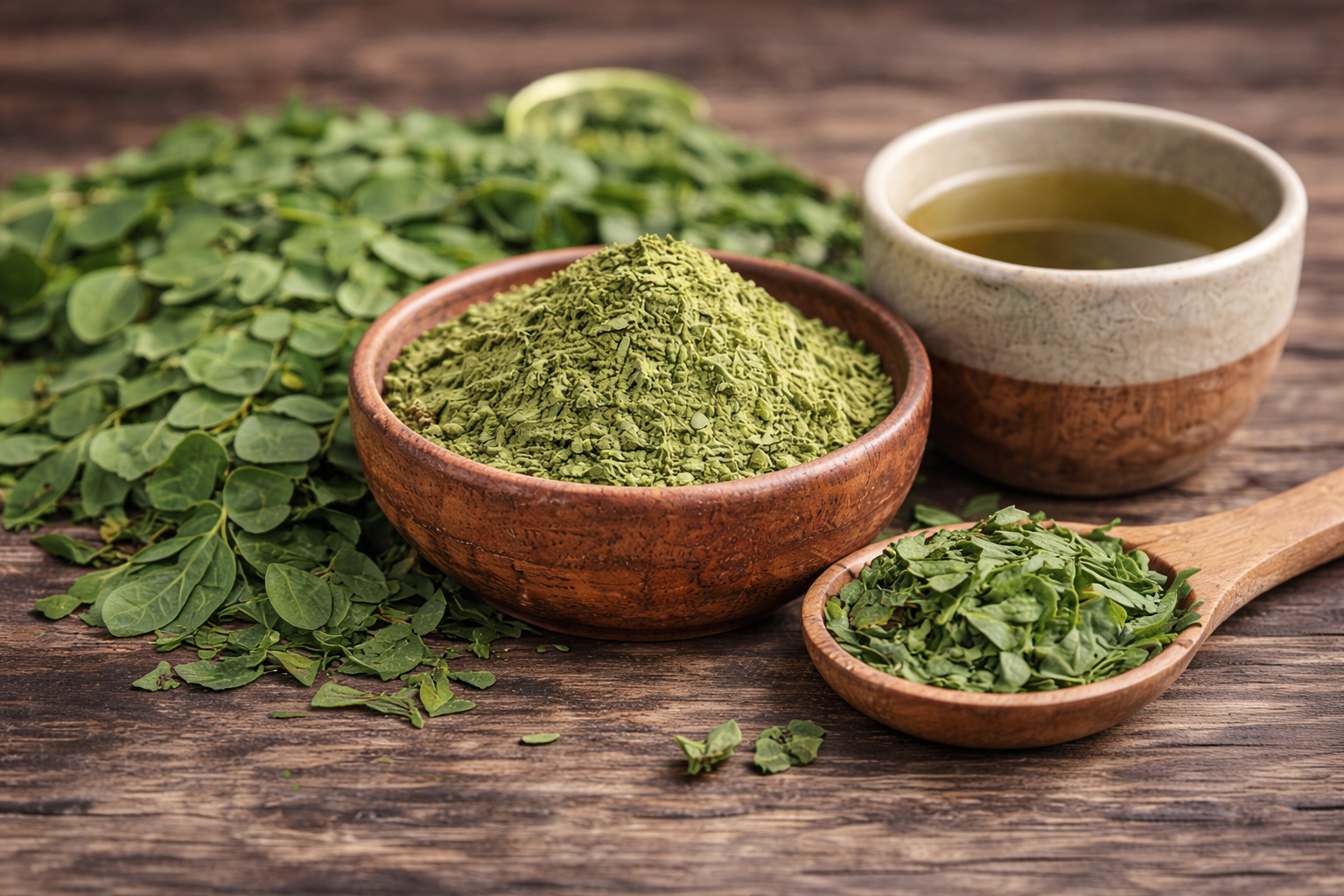
Der Moringa-Baum wird traditionell in verschiedenen Formen genutzt – unter anderem als Blattpulver, Tee, Öl oder Zutat in der Küche. Die Verwendung variiert je nach Land und Region.
These topics provide an overview of the most important aspects of the Moringa plant and serve as an introduction to the individual areas of knowledge.
Moringa in Detail – Cultivation, Effects and Uses
After you have gained an overview of the most important topics related to Moringa, we now take a closer look at individual aspects. We examine cultivation, ingredients, sustainability, and traditional uses of the plant in a differentiated and factual manner. This Moringa knowledge serves as a foundation for better understanding the following topic areas.
Nutrients and Active Compounds of Moringa
The leaves of the Moringa tree contain a wide range of natural compounds. These include vitamins, minerals, plant-based proteins, as well as secondary plant substances that are examined in various scientific studies.
Scientific institutions are also engaged in research on the Moringa plant, particularly in the fields of nutrition and plant science, for example within international medical databases.
• Vitamins and minerals
• Plant-based proteins
• Secondary plant compounds
• Natural dietary fiber
Cultivation and Climate of Moringa
Moringa thrives primarily in tropical and subtropical climates. The plant prefers warm temperatures, sufficient sunlight, and well-drained soils. Under these conditions, it can grow quickly and be harvested regularly.
Although Moringa is considered resilient, location, rainfall, and soil quality significantly influence the plant’s development. In particular, waterlogging and prolonged cold can negatively affect its growth.
In regions such as Southeast Asia, Africa, or parts of Latin America, different cultivation methods have been established. These take local climate conditions into account and allow for sustainable use of the plant over longer periods of time.
• Warm, sunny climate
• Well-drained soils
• Regular but moderate watering
• Protection from frost and waterlogging
Sustainability and Environmental Aspects of Moringa
Moringa is often described as a resilient plant that can be cultivated with relatively low resource input under suitable conditions. Characteristics such as rapid growth and modest soil requirements make it attractive for sustainable cultivation models in certain regions.
Compared to many other crops, Moringa’s water requirements are considered moderate. However, actual resource consumption depends heavily on climate, location, and cultivation methods. Sustainability therefore does not occur automatically, but results from appropriate management practices.
In addition to ecological aspects, social factors also play an important role. Fair working conditions, transparent structures, and responsible use of natural resources are central elements of sustainable Moringa cultivation.
• Rapid growth under suitable conditions
• Moderate water requirements
• Adaptability to different soil types
• Importance of fair and transparent cultivation models
Uses of Moringa
Moringa is traditionally used in different ways across various regions of the world. The leaves in particular play a central role and are incorporated into daily diets either fresh, dried, or further processed.
Among the most common forms of use are dried leaves, Moringa powder, or tea. The specific use depends largely on cultural practices, regional traditions, and individual preferences.
In addition to its use in nutrition, Moringa is also applied in other areas, such as agriculture or handcrafted products. It is important to clearly distinguish between traditional uses and modern interpretations.
• Fresh or dried Moringa leaves
• Moringa powder as an ingredient in food
• Moringa tea
• Regional and traditional applications
Frequently Asked Questions About Moringa
❓ What exactly is Moringa?
Moringa is a plant from tropical and subtropical regions that has been used for centuries in various parts of the world. The Moringa tree is particularly known for its leaves, which are traditionally used in nutrition.
❓ How is Moringa traditionally used?
Traditionally, Moringa is mainly used for its leaves – fresh, dried, or as tea. The specific form of use varies depending on region, culture, and local customs.
❓ Is Moringa a medicinal remedy?
Moringa is not a medicinal product. In many cultures, the plant is used as a food. Scientific studies examine individual components, but they do not replace medical advice.
❓ Why are there so many different claims about Moringa?
Information about Moringa ranges from factual descriptions to heavily exaggerated marketing claims. These differences arise from factors such as origin, quality, cultivation methods, and the way information is presented.
❓ Are there scientific studies on Moringa?
Yes, Moringa is examined in various scientific studies, particularly in the fields of nutrition, agriculture, and plant diversity. However, the results usually focus on individual components and specific research questions.
❓ Why is the cultivation of Moringa crucial for its quality?
Climate, soil, water, and harvesting time influence the characteristics of the plant. Therefore, cultivation plays an important role when it comes to quality, transparency, and traceability.
Understanding Moringa – Origin, Cultivation and Responsibility
Moringa is a versatile plant whose characteristics depend strongly on its origin, cultivation methods, and processing. Anyone who looks more closely at the topic quickly realizes that transparency and responsible handling play a central role. This is precisely why it is important not only to read about Moringa, but also to understand where and how it is grown.